




Football, War, Remembrance and Commemoration 2026
18/11/2026 - 4.33
Alex Alexandrou
The 2026 Remembrance period proved to be the busiest and most rewarding one to date for the Football and War Network and its collaborations with the Army FA, Western Front Association, Charlton Athletic Museum, Leyton Orient Supporters Club, O’s Somme Memorial Fund and Dulwich Hamlet FC.
On the 1st November, I was invited to represent the Football and War Network and the Army FA, at the Headstone Dedication Ceremony for Fred ‘Spider’ Parker, at New Southgate Cemetery in London.
At the outbreak of the First World War, Fred was the captain of Clapton Orient and holds the honour of being the first footballer to sign up for the Duke of Cambridge’s Own (Middlesex) Regiment – 17th Service Battalion (First Footballers’ Battalion), at a specially organised recruitment meeting held at Fulham Town Hall in London, on the 15th December.1914. He was joined by over 40 other Clapton Orient players, officials, staff and supporters, who signed up to serve in the Great War.
Fred was a fearless and inspirational leader on both the football pitch and the battlefield. During his service, he attained the rank of Colour-Sergeant. Despite suffering from trench foot and being wounded, he survived the conflict. Fred returned to Clapton Orient to continue his professional playing career, where he made a total of 336 appearances, scoring 34 goals.
He passed away in January 1963, aged 76. Unfortunately, Fred died in poverty and was laid to rest in an unmarked pauper’s grave. It was only recently that the O’s Somme Memorial Fund (OSMF) found out that this was the case. It was then decided to firstly, locate the grave and then set out ensuring that Fred would be laid to rest with the dignity and honour he deserved. This led to the OSMF raising the funds for a headstone and then organising the Headstone Dedication Ceremony.
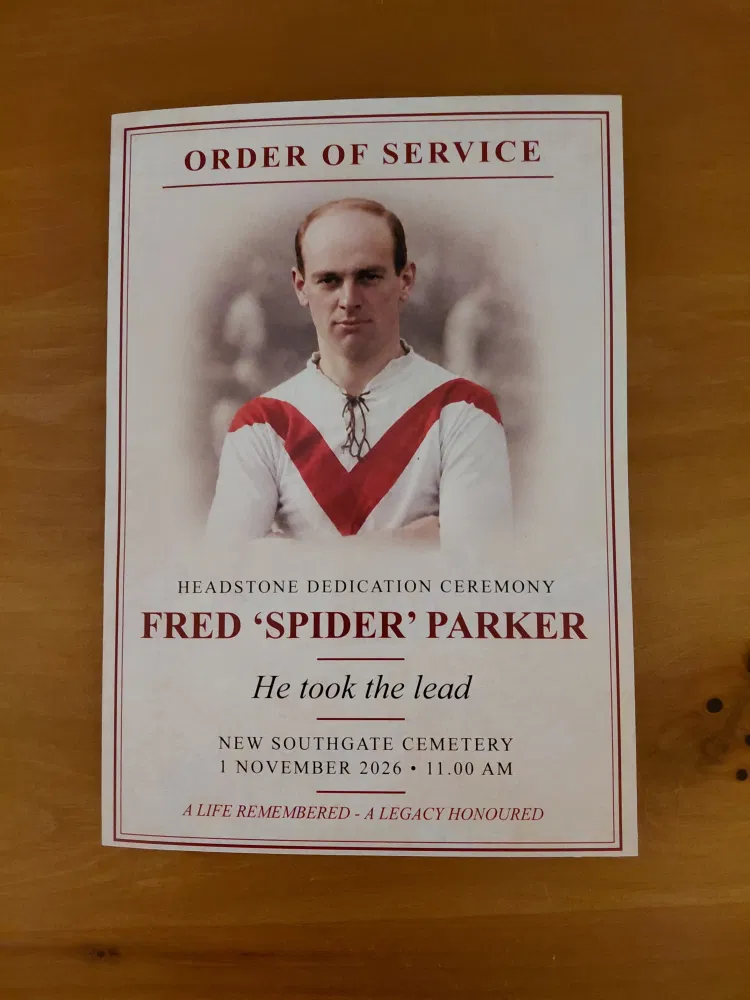
Order of Service. Source: Author's Collection
The Ceremony was very well attended with the 17th Pal’s Battalion leading attendees to the graveside. There were speeches paying tribute to Fred’s life, footballing achievements and military service, followed by the unveiling of the Headstone, wreaths laid, the Exhortation recited and the Last Post sounded. Fred was finally laid to rest with dignity and honour.
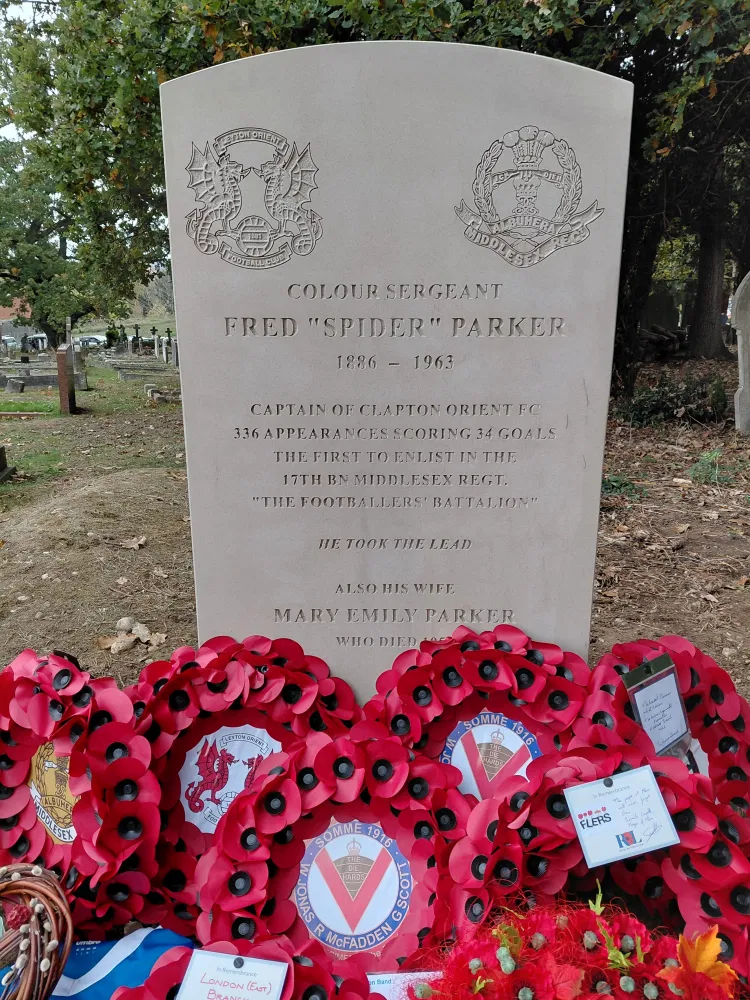
Fred 'Spider' Parker Headstone. Source: Author's Collection
On the 2nd November, we held our second Football, War and Remembrance event with the Charlton Athletic Museum in partnership with the Army FA and the Kent North West branch of the Western Front Association.
Before the event, Clive Harris and I had the honour of laying a wreath at the Club’s War Memorial on behalf of the Army FA and the Football and War Network.
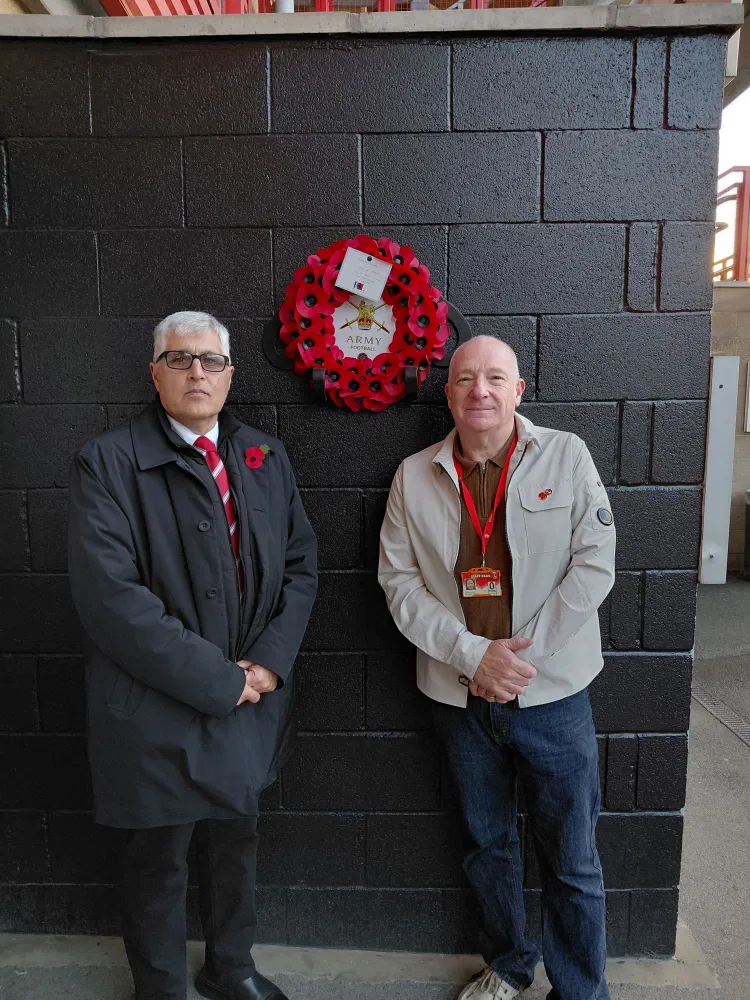
Alex Alexandrou and Clive Harris Laying a Wreath on behalf of the Army FA and Football and War Network at the Charlton Athletic FC War Memorial. Source: Author's Collection
This was then followed by Steve Hunnisett, leading a World War Two Blitz Walk around Charlton. A number of locations were visited including, Charlton Station that was hit by a V-1 in June 1944; and sites on Floyd Road and Charlton Lane where in 1940, in separate raids, HE bombs destroyed a number of houses. In relation to Charlton Lane, Albert Britain was awarded the George Medal for his part in leading the rescue effort to save the lives of a number of the occupants of houses that were destroyed. The group visited Ransom Road railway bridge which was utilised as a surface shelter during bombing raids. Steve went on to talk about shelters and their importance. He also highlighted the important work of the Air Raid Precautions which later on in the war expanded to become the Civil Defence Service.
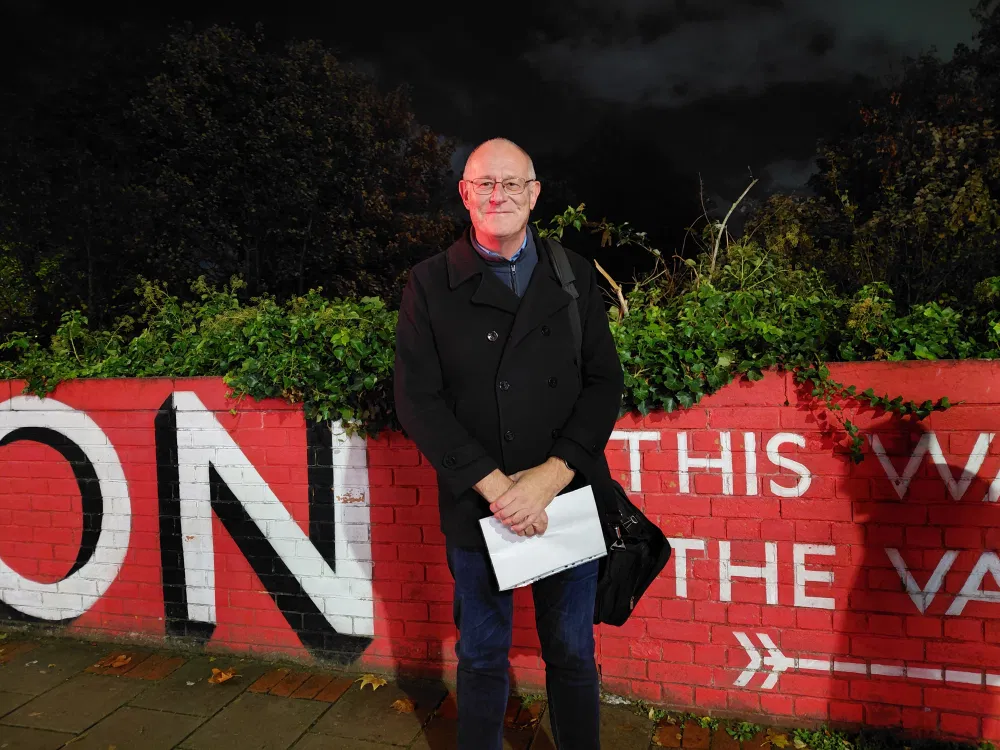
Steve Hunnisett About To Begin the Blitz Walk. Source: Author's Collection
On returning to the Museum, Clive Harris gave a talk entitled – Five out of Six Returned Home, arguing that this fact is often overlooked in relation to discussing the aftermath of the Great War. He described the impact the First World War had on the area in relation to conscription and employment in war-related occupations. Clive described the impact the Great War generation had on the club’s development in the post-war period. Notably, in relation to the construction of The Valley, which in 1919 was the second largest construction project in London after the GLC Building. Clive spoke about the first match at The Valley against Chatham in the Kent League on the 25th October 1919, as well as the great FA Cup campaign of 1923, regarded as the first giant killing cup run in the competition’s history, including the match against Bolton Wanderers, when during the game, railings collapsed causing many injuries amongst spectators. The subsequent lawsuits swallowed up most of the cup run receipts and in part led to the ill-fated move to Catford. Clive concluded by stating it is important to remember those who lost their lives in the Great War and other conflicts but also the contributions of those who returned and helped to rebuild not only the club but the society we now know today.
Attendees had the opportunity to look around this excellent Museum and its many exhibits.
There then followed a panel discussion with Martin Carey of the Armed Forces Addicks, Clive Harris and Ben Hayes of the Museum. Topics discussed included; club staff being involved with the military and how far the back the relationship between the club and the military community goes; how the club interacts with the military community and the links the local community has with the military; how the local civilian population has been involved in the military infrastructure within the area; and memories of Charlton Athletic whilst serving in the military.
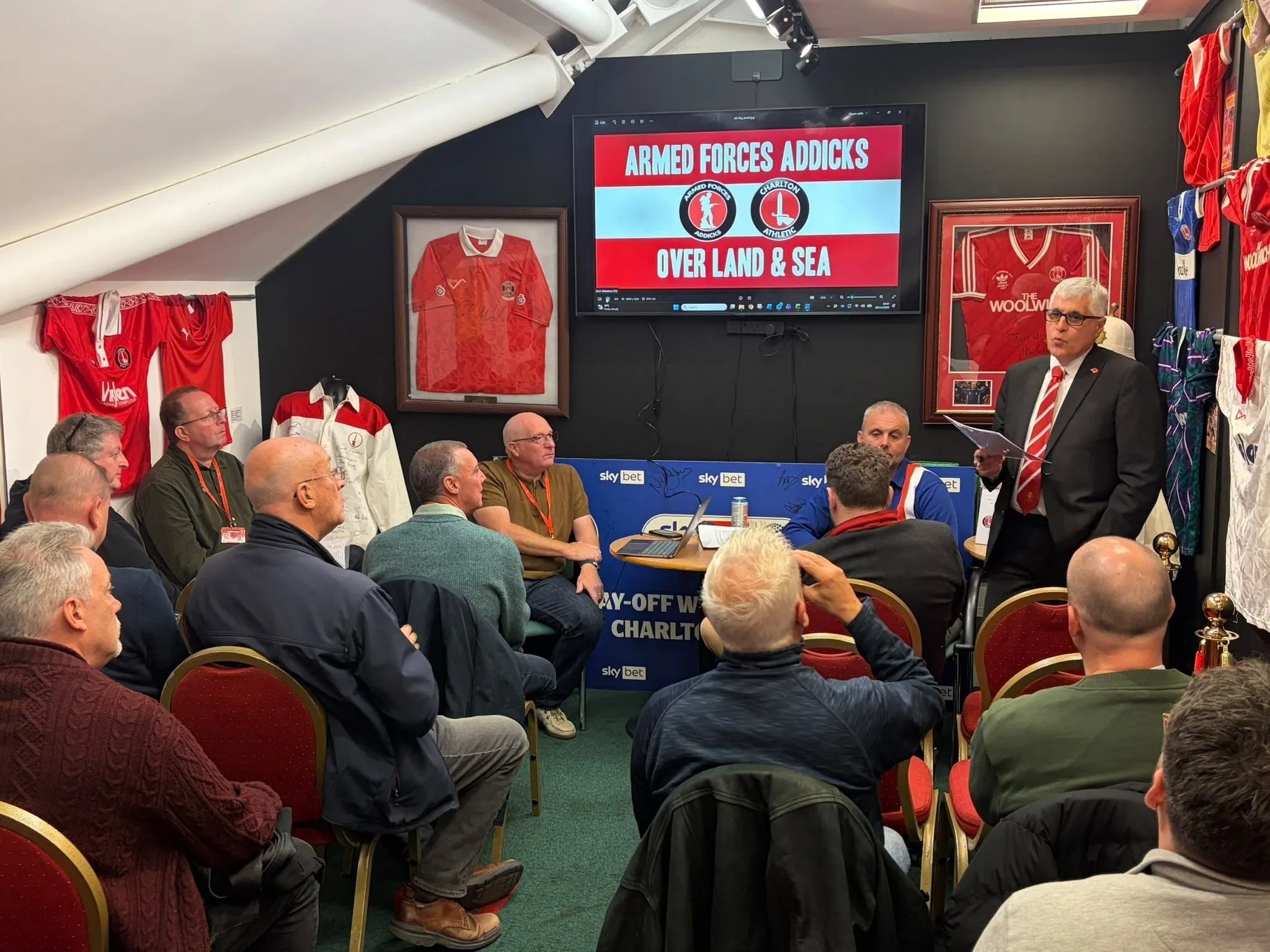
Panel Discussion. Source: Clive Harris
The event concluded with an Act of Remembrance and solemn reflection.
On the 5th November, we held our second Football, War and Remembrance event at the Leyton Orient Supporters Club in partnership with the O’s Somme Memorial Fund, Leyton Orient Trust, Army FA and the London East branch of the Western Front Association.
The event was accompanied by an exhibition which had the following themes - The History of the Army FA and Army Football; Clapton Orient and the First World War; and Women's Football and the Home Front During the First World War.
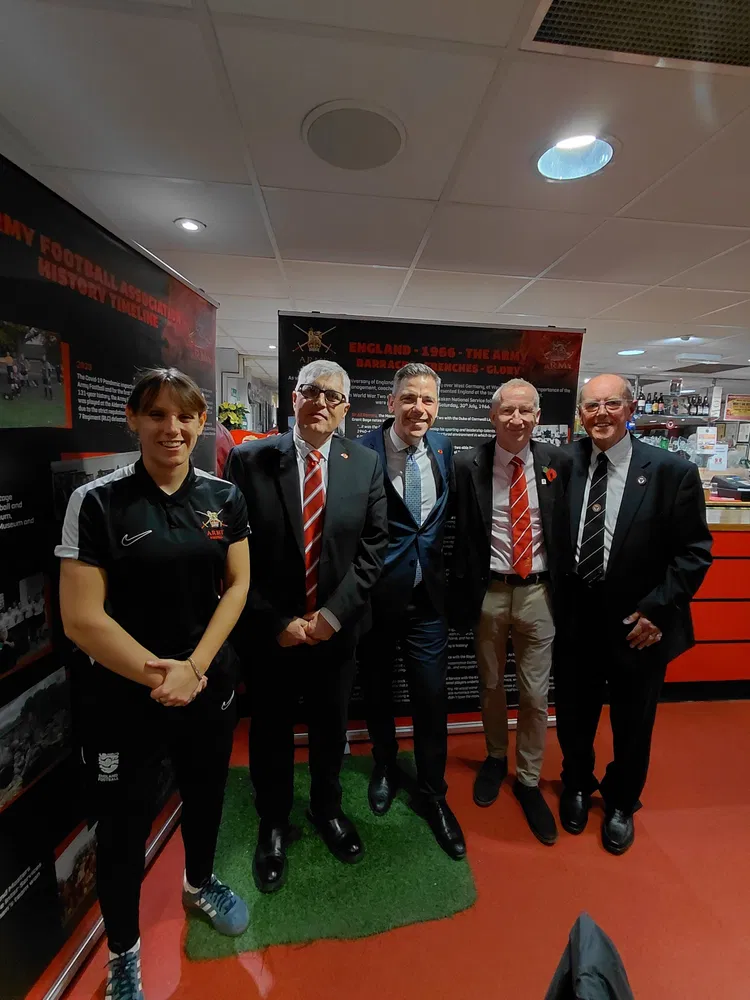
Left-to-Right - Issey Lee-Fisher (Army FA), Alex Alexandrou, Colonel David Jones (Army FA), Christopher Evans MP and Steve Jenkins. Source: Author's Collection
Chris Hunt, Chair of the WFA London East branch opened proceedings with a talk entitled – So, What has the Western Front Association Done for Me? Chris spoke about the activities and work of the branch, including some of the tours it has organised to First World War Battlefields and working with experts and historians such as Peter Doyle, Peter Hart and Mark Smith.
This was followed by a fascinating talk by Christopher Evans MP based on his recently published book – The Football Battalions: The Elite Players Who Fought in the Great War. He spoke about players such as Tim Coleman, Vivian Woodward, Steve Bloomer, Evelyn Lintott and Joe Mercer Senior in terms of the differing experiences of the war from both a football and military perspective. This was then followed by a book signing where many of the audience were able to get their hands on this informative and unique publication.
Steve Jenkins and Peter Kitchen, of the OSMF, then spoke about the history of the organisation in terms of the activities it has undertaken and the events it has been involved in. These have included raising funds for two Clapton Orient Memorials, one in France at Flers and the other at the Royal British Legion Remembrance Gardens, formerly known as the National Memorial Arboretum, in Staffordshire. Other achievements have included commemorating the 100th Anniversary of the Football Battalion recruitment meeting held at Fulham Town Hall; co-producing the two Greater Game plays for the Football Remembers initiative; facilitating the Hearts v Leyton Orient pre-season friendly in 2024; raising funds for and then unveiling the headstone for Fred ‘Spider’ Parker (as highlighted above); and organising nine Battlefield Tours to the Somme, the latest being in July of this year with a combined total of over 2000 fans going on these tours.
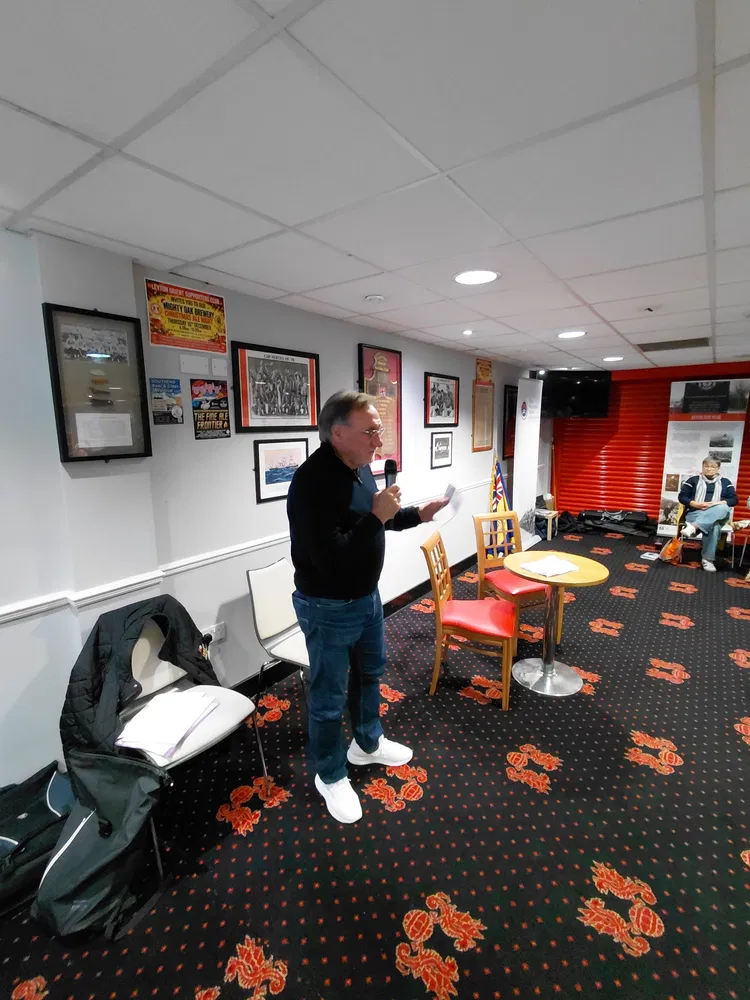
Peter Kitchen. Source: Author's Collection
Neil Taylor, the Chief Executive of the Leyton Orient Trust spoke about the Trust’s work in the local community, particularly in relation to its educational activities, which include telling the story of Clapton Orient during the Great War and the role of women both in terms of their contribution to the war effort and playing football during the First World War.
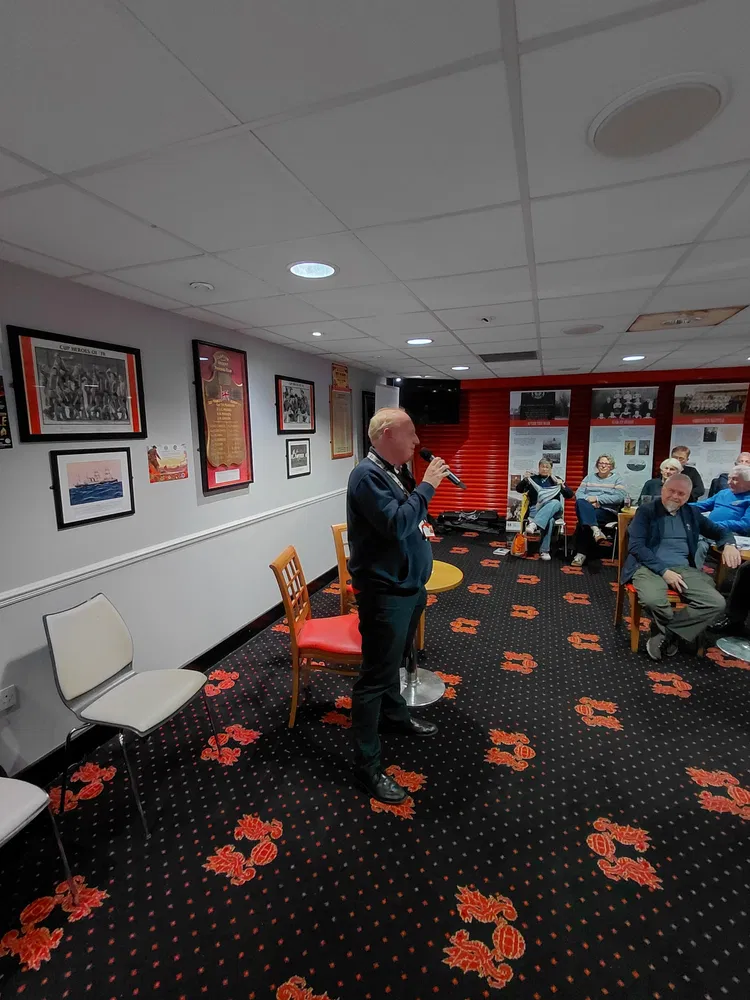
Neil Taylor. Source: Author's Collection
This was followed by an intriguing and in-depth talk by the battlefield guide, Richard Burgess entitled – The Chaplain V.C.s of the First World War. Richard spoke about their backgrounds, as well as their work and acts of bravery on the Great War battlefields. They represented a number of Christian and other religious denominations, providing pastoral and spiritual support to soldiers. The talk featured stories about individuals such as Reverend Edward Noel Mellish, Reverend William Robert Fountains Addison, Reverend Theodore Bayley Hardy, Canon Frederick George Scott and Father William Joseph Doyle.
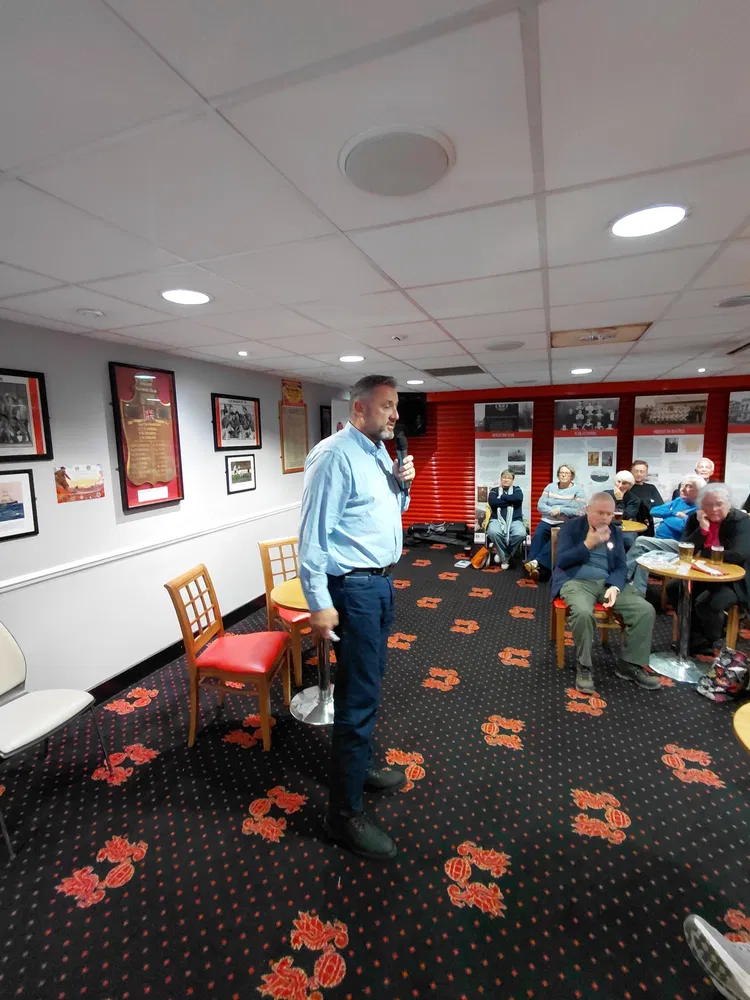
Richard Burgess. Source: Author's Collection
The final presentation was given by Steve Bolton, one of the foremost Women’s Football historians. It was entitled - World War One: The Women Footballers of Leyton. Steve spoke about a recently discovered Great War local women’s team – London Electric Wire Company and Smiths Ltd (LEWC) Ladies team, that was located very near the current stadium. He went on to talk about a number of famous female footballers such as Maud Reader, the number of women’s teams, including the Sterling Ladies, commonly referred to as the Dagenham Invincibles; and the volume of matches played during and just after the First World War, throughout the United Kingdom and Ireland, which resulted in a huge amount of money raised by these teams from the match-day proceeds for wartime and post-war reconstruction charities.
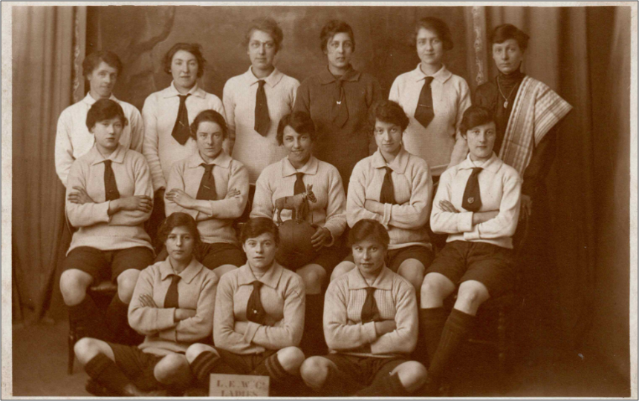
LEWC Ladies Team. Source: Steve Bolton
The event was concluded with an Act of Remembrance. Chris Hunt recited the Exhortation, followed by Steve Jenkins, blowing a trench whistle, then sounding the Last Post and finally, the Royal British Legion Standard Bearer for the evening, Andrew Milner, reciting The Kohima Epitaph. All those present stood and remembered in solemn reflection.
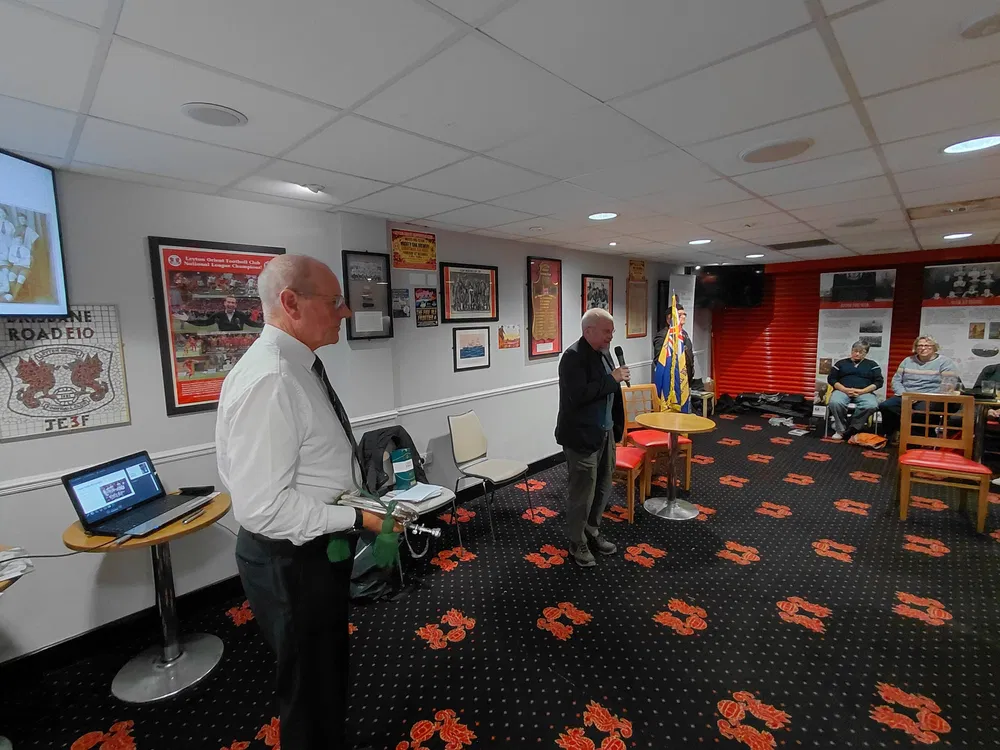
Chris Hunt, Steve Jenkins and Andrew Milner Conducting the Act of Remembrance. Source: Author's Collection
On the 7th November, I attended the Dulwich Hamlet v Lewes match. This match was Dulwich Hamlet’s designated Remembrance match and the Football and War Network, along with the Army FA and the Dulwich Hamlet History Group were accorded the honour by the club of organising the Remembrance activities for this game.
It began with the traditional wreath laying ceremony at the club’s War Memorial, which was attended by officials of both teams, Dulwich Hamlet History Group members, supporters and representatives of the Royal Engineers Association Football Club, who all laid wreaths. Steve Hunnisett on behalf of the History Group and the club welcomed the attendees and spoke of the history and tradition of this solemn but simple ceremony. Steve Campbell (also representing the Royal Engineers) and I, laid a wreath on behalf of the Army FA and Football and War Network.
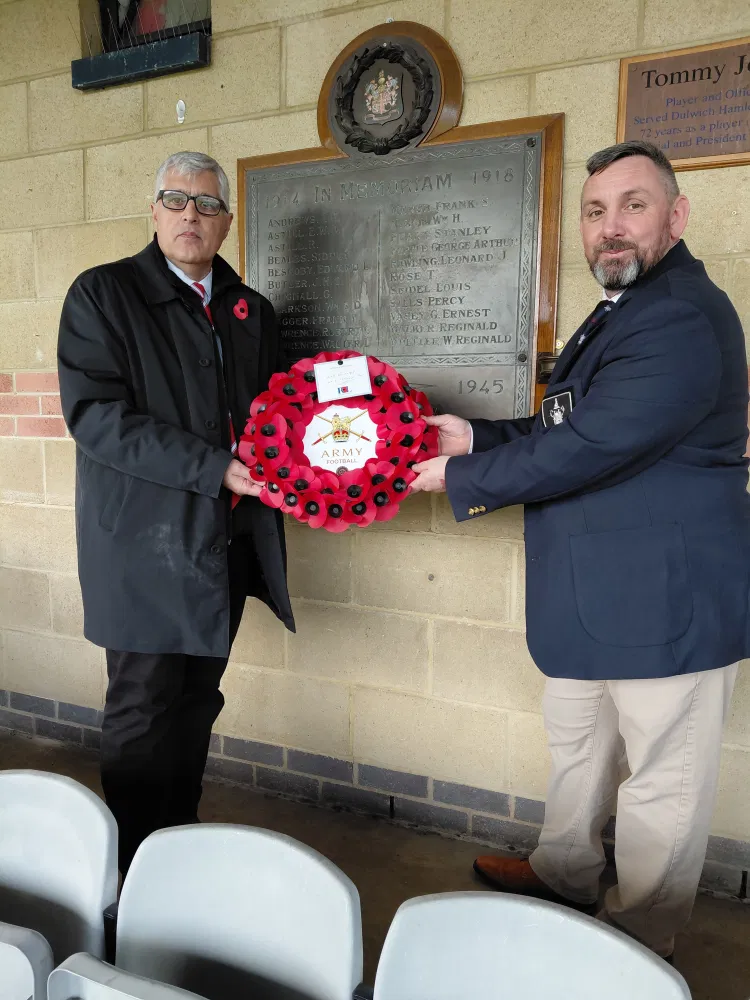
Alex Alexandrou and Steve Campbell. Source: Author's Collection
This was then followed by a series of talks on aspects of the club’s history, its links with the military and the role the club, its players and officials, played during the Second World War. Steve Hunnisett spoke about Dulwich Hamlet and the Civil Defence Service, which enabled a number of members of the club to serve if they were unable to join the Armed Forces. Such as Harold Clegg, who served as an ARP Warden; Bert Humphreys, who served with the Auxiliary Fire Service; and the legendary Edgar Kail who served as a War Reserve Police Constable. I spoke about Dulwich Hamlet and Military Football During World War Two, highlighting that the club played friendly matches at Champion Hill against military teams such as the Royal Warwickshire Regiment, Royal Artillery, Royal Air Force and the Royal Netherlands Navy. It also hosted prestigious matches for the Inter-Allied Services Cup and an FA XI v the RAF XI match in 1940, with Dulwich Hamlet’s own Reg Andersen representing the FA. Reg was killed in action in 1942 and is commemorated on the club’s War Memorial. Finally, a talk was presented on behalf of the Ukrainian football historian, Oleksandr Dvoinisiuk, who has written about one of the club’s early pioneers – Charles William Bate, whose work for the Indo European Telegraph Office took him to Imperial Russia. His love of football led him to leave a lasting legacy of developing the game of football in the Black Sea ports of Nikolaev (now Mykolaiv) and Odessa.
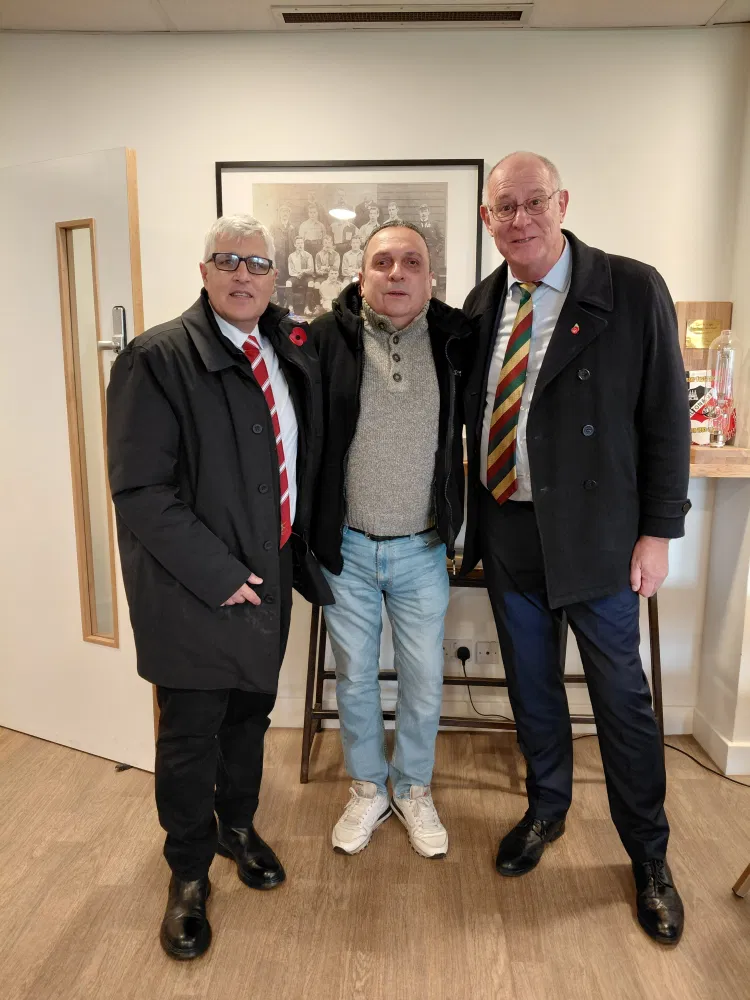
Alex Alexandrou, Oleksandr Dvoinisiuk and Steve Hunnisett. Source: Author's Collection
There then followed the Act of Remembrance prior to the start of the match. The Royal Engineers AFC representatives led the teams on to the pitch. I was accorded the honour of laying the club’s wreath along with Lewes FC representative Terry Morton. There then followed the Exhortation, Last Post and The Kohima Epitaph, all of which were impeccably observed by the near sell-out crowd of 3,100. A pity the result was not a favourable one, as Lewes ran out 3-2 winners.
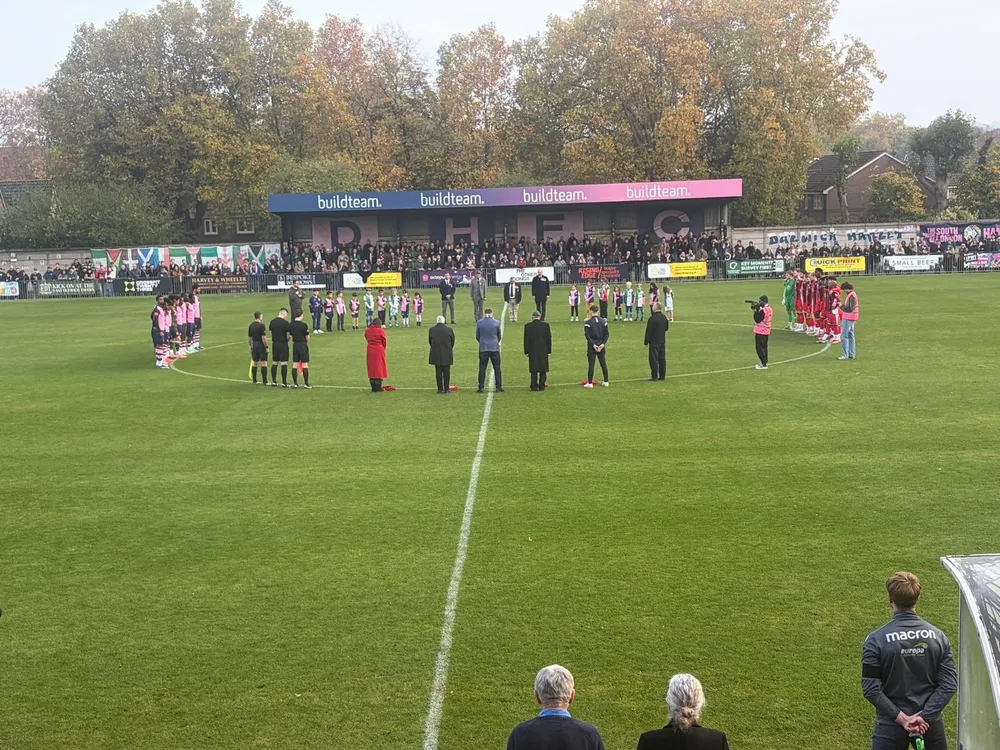
Dulwich Hamlet Act of Remembrance. Source: Dulwich Hamlet FC
Finally, on the 11th November, I represented the Football and War Network and the Army FA, as part of the Football Contingent at the Annual Service of Remembrance that takes place at The Cenotaph, Whitehall, London, organised and run by the Western Front Association. Along with representatives from the Football and War Network, Charlton Athletic Museum, Chelsea Graves Society, Dulwich Hamlet FC, Wealdstone FC, O’s Somme Memorial Fund, 17th Pals’ Battalion Band, Women Footballers of the First World War and the North East Essex Co-operative Academy, we paid our respects and laid wreaths in remembrance of all the footballing community who made the ultimate sacrifice in the Great War. Following this ceremony, there was a Memorial Service of Remembrance and Thanksgiving at The Guards’ Chapel, Wellington Barracks, London. As always, this was a moving service and gave all those attending time to reflect on the significant sacrifices made and service undertaken during the First World War.
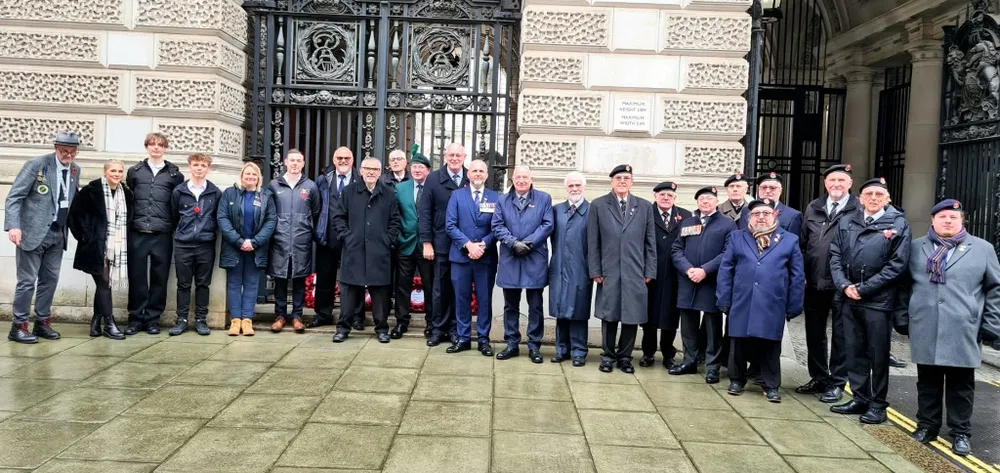
Football Contingent. Source: Steve Bolton
Lest We Forget
We Will Remember Them